
.png)
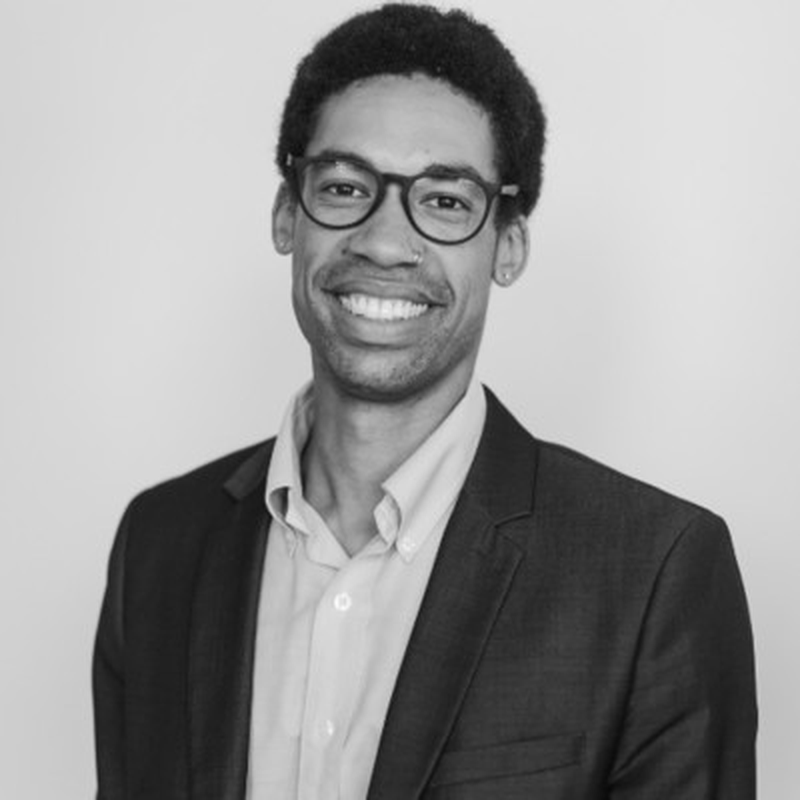
Gabe Kwakyi explains why building apps with AI is easy and getting results is the hard part.
Gabe Kwakyi has 16 apps live, all built with AI.
The gap between building an app and getting results is the whole conversation. When anyone can ship an app in a day, what is actually hard?



Gabe on LinkedIn: https://www.linkedin.com/in/gabrielkwakyi/
Rhythmic Apps: https://rhythmicapps.com/
Ink: Daily Journaling Prompts: https://apps.apple.com/us/app/ink-daily-journaling-prompts/id6761030956
Newsletter: https://intelligentartifice.kit.com
FULL TRANSCRIPT BELOWShamanth: Welcome to Intelligent Artifice, a part of the Mobile UA show.
Shamanth: Intelligent Artifice is a deep dive on how AI is transforming growth and performance marketing.
Shamanth: Since 2018, over 250 plus episodes, we’ve been deconstructing how the best growth marketers actually win.
Shamanth: And every week, I sit down with one operator shaping the future of growth in an AI world.
Shamanth: My guest today is Gabe Kwakyi. Gabe is the founder of Rhythmic Apps, a studio that makes apps built with AI. Gabe co-founded the ad agency Incipia in the past and co-authored a book on advanced app store optimization. Later, he led Lingvano, a sign language learning app. I thought this would make for a great episode because Gabe has gone from operator and marketer to a builder, and he’s done a lot of this hands-on.
Shamanth: Today, he manages a portfolio of 15 apps with his partner. He talks about how the tools have now let one person build a full app in about a day, and yet even though building has gotten easy, the bottleneck has moved further up the funnel to distribution, positioning, intuition, and design. In today’s episode, Gabe talks about everything that happened when he went from one app to a portfolio, what traction looks like, why viral success stories can be elusive, what he’s seeing with ChatGPT ads, and so much more.
Shamanth: Let’s get right into it.
Shamanth: I’m excited to welcome Gabe Kwakyi to Intelligent Artifice.
Shamanth: Gabe, welcome to the show.
Gabe: Thanks for having me. I’m excited to be here and ready to chat. Let’s go.
Shamanth: Yeah, let’s go. And I’m very excited to have you because of course, we’ve known each other for a very long time.
Shamanth: And when we last spoke, it was actually very fascinating because
Shamanth: You talked about creative volume and testing before it was cool, way before it was cool.
Shamanth: And today we will hopefully talk about some things that you’re leading the way on
Shamanth: That I think will open the eyes of people before these things become cool.
Shamanth: I know we were chatting just prior to hitting record about ChatGPT ads which you’re diving into,
Shamanth: And about your launching your own studio.
Shamanth: So, talk to me about, you know, what led to the decision to start your own studio.
Gabe: Just always having an interest in apps and wanting to be product side, building them myself.
Gabe: So when we met, this was a few years ago, I was running this ASO and ad agency called Incipia.
Gabe: And my co-founder and I did that for about five years from 2015 to 2021, five and a half years.
Gabe: And we did a lot of work marketing other people’s apps, which was fun.
Gabe: And after that, I went and spent a little time at Feature.
Gabe: And then eventually came to Vienna where I reside now
Gabe: And joined this sign language learning app called Lingvano.
Gabe: And that was the first time that I worked product side.
Gabe: I also worked at Microsoft Bing as like a ad account manager, but this was actually being in the team that’s making the product.
Gabe: And it was fun. It’s really cool when you actually like are building out the different features and things.
Gabe: You have kind of control over the onboarding, the monetization, those different things.
Gabe: You have more leeway than if you’re an agency or a marketer alone just kind of consulting on someone else’s app.
Gabe: And so on the side I started building an app with my girlfriend to help people prevent work burnout.
Gabe: And that was what we wanted to work on and we went full-time in January of this year.
Gabe: It’s doing our own thing, building our own app, and it’s been quite a journey.
Gabe: Hasn’t panned out from zero to one as we had hoped, getting product market fit.
Gabe: But that led to the second pivot, which we were talking about I guess a few weeks ago, which is to go from having one app to having a portfolio of apps.
Shamanth: Yeah. So that’s now.
Shamanth: Yeah. And my understanding is that the other big change that has happened is, you know, when you were product side at Lingvano,
Shamanth: I would imagine you had a tech team.
Shamanth: And it is my understanding that when you ran the agency, you also had a tech, at least a tech partner/senior person.
Gabe: We did, building internal tools.
Shamanth: Yes. So what has changed since that those two episodes to today?
Gabe: The whole world for building software is totally shifted.
Gabe: I’m sure everyone listening is knows exactly, okay, they’re probably using Claude Code, they’re probably using Claude Design, Codex, ChatGPT, whatever.
Gabe: But just people don’t write software anymore.
Gabe: People manage agents that write software.
Gabe: So that’s a complete paradigm shift and at first with our app, we had a developer who was writing the code.
Gabe: And eventually, we decided we needed to go a different direction and now it’s all done by AI.
Gabe: So there’s just so much that’s different and it’s more, I saw someone
Gabe: Doing an AI podcast was saying, the question isn’t like, can you build it?
Gabe: It’s what should you build and is that are you using the technology to its fullest potential?
Gabe: You’ve got the whole token maxing thing that’s going on, the AI vampires who don’t go to sleep because they’re just trying to
Gabe: Maximize the use of agents and teams of agents and all that.
Gabe: So the world right now is, okay, are you leveraging your Claude subscription to get the most out of it on an ongoing basis?
Shamanth: Yeah. Yeah. Was there a specific aha moment when you’re like,
Shamanth: My goodness, I can actually do this myself versus having an external development team?
Gabe: Yeah, it was shown to me by a friend that consulted with us
Gabe: On the particular project of can we make an app end-to-end all through code or all through AI.
Gabe: And so he built our journaling app, Ink.
Gabe: And the answer was yes. Before that point, I had played around with Lovable, with Vercel v0.
Gabe: And I made a website. That was cool. But I thought, no, no, no, you can’t make a full mobile app.
Gabe: That’s way more complex, right?
Gabe: But no, you definitely can. You can do it native, you can do it cross-platform.
Gabe: There’s really no bugs usually when you implement it.
Gabe: It’s more just testing and making sure the end product, which generally works,
Gabe: Has all the edge cases and all the flows and all the nuances and all the AI slapped kind of fixed how you like it.
Shamanth: Yeah. Yeah. And you know, yeah, I’m always very curious about the first time for very many people, for everybody I talk to because
Shamanth: My own first time was really, I was so intimidated and I was just chatting with the AI and I was like, what’s a way to do this
Shamanth: That isn’t going to scare me off?
Shamanth: And this was like a year and a half ago before agents were a thing, you know, you could still use stuff like Cursor,
Shamanth: But it wasn’t like you could one-shot apps.
Shamanth: And I actually got very good advice back then, which was just start with something stupid simple.
Shamanth: And I remember building a weather app and I never ended up submitting it, you know, it went into Xcode, it came went into simulator and I was like, oh my goodness, this is
Shamanth: Shocking that I could actually do this.
Shamanth: That let me continue to build.
Shamanth: And you’re right, it just blows your mind once you start noticing what you can actually do.
Shamanth: Yeah. And you know, you also mentioned you have a portfolio of apps, not just one single app.
Shamanth: Talk to me about the portfolio itself. What does it look like?
Shamanth: Which ones are picking up, which ones aren’t, and how you might define pick up, right?
Shamanth: And what if anything is common between the ones that are actually picking up versus the ones that are not?
Gabe: Yes, so we do have a portfolio. At one point we had 16 apps live.
Gabe: And we scaled it back because there was a few that we just we didn’t really feel that the quality was there.
Gabe: And so now we’re focusing on continuing to launch new apps.
Gabe: Probably we’re kind of trying to target like one or two every couple of weeks.
Gabe: And zeroing in on a couple areas that really resonate with my girlfriend and I
Gabe: And also that we’ve seen the more success in.
Gabe: One is journaling, reflection, these kind of apps.
Gabe: Another is like question apps, could be trivia, could be questions that you ask one another, like a couple questions.
Gabe: Things like that.
Gabe: And so those are the ones that are picking up the most and like what defines working.
Gabe: For me kind of like a starting signal is 10k ARR.
Gabe: Okay, once you get to this point, it’s not enough to, you know, get out of bed and like quit your job for or stay out of work for.
Gabe: But that’s a moment of traction where it’s not, you know, a flash in the pan and gone.
Gabe: And also maintaining that.
Gabe: And so there’s a couple of apps that we have that have gotten to that level.
Gabe: And but out of the portfolio and it’s just a couple. It’s Ink and it’s Togella, our couple’s question app.
Gabe: And so, yeah, we’re trying to improve onboarding, monetization, adding new features, improving day one, day seven retention.
Gabe: Those types of things for those two apps and again launching other apps to try to make a better first take
Gabe: In one of these like we call them family or themes of apps, journaling, reflection, and question apps.
Gabe: But it’s not easy.
Gabe: We were talking before and you know, it’s you’re working as an agency or as a consultant or a freelancer or whatever, you’re working with other people who
Gabe: Only kind of brought you on board because it’s product market fit.
Gabe: Otherwise, they couldn’t really like afford to bring you on or you wouldn’t be able to scale the product. It’s not ready yet.
Gabe: When you try to do it yourself, you realize just how difficult it is to get that zero to one product market fit.
Gabe: And I wouldn’t say that we have product market fit for any of our apps.
Gabe: That 10k ARR is like, okay, you crossed a milestone where you might be able to get to it.
Gabe: But a lot of other things have to go well. You’ve got to get the metrics in order, you’ve got to find continuous source of
Gabe: People that want to keep using it.
Gabe: Yeah. Yeah.
Shamanth: Yeah, how would you know, define product market fit? When would you sort of know you’ve gotten it?
Gabe: I’m not a product marketer or product person.
Gabe: By background.
Gabe: So,
Gabe: Usually I look at
Gabe: What I know and that’s growth.
Shamanth: Sure.
Gabe: And
Gabe: I guess two thoughts. One is
Gabe: You kind of know it when you know when you see it, you know when you feel it.
Gabe: Okay, retention is great. Wow, conversion is great. Wow, people are leaving messages
Gabe: And saying this is really great. You’re seeing star ratings,
Gabe: You know,
Gabe: Or star ratings volume going up. You’re seeing organic volume growing up.
Gabe: You’re just seeing all these different data points that
Gabe: In aggregate make you feel like, okay, this has stickiness, it’s got staying power.
Gabe: And if we keep investing into it,
Gabe: It’s already got traction.
Gabe: What defines that? I guess,
Shamanth: Yeah.
Gabe: 10k ARR going towards 20k ARR.
Gabe: Your
Gabe: Conversion rate into trial
Gabe: Is 10 to 20%. Your conversion rate from trial to subscription is
Gabe: 30 to 50%.
Gabe: Your day one retention, depending on what kind of monetization model you have is
Gabe: 20 to 40%.
Gabe: You know, there I could name different numbers and in different things there. Your cost per install, you know, is less than $2 or your cost per trial is
Gabe: Less than $25.
Gabe: You know, those are a few of the things that you would look for or I would look for.
Shamanth: Sure.
Gabe: In an aggregate, if you only have one of those, it’s not going to be enough.
Gabe: You’ve got to have these things coming together.
Gabe: But really another one is like
Gabe: Increasing
Gabe: Compounding growth and revenues.
Gabe: If you don’t have product market fit,
Gabe: Maybe you’ll have something that’s flat, but eventually it’s going to fall off.
Gabe: So product market fit, I guess overall, the kind of biggest signal for me would be
Gabe: It’s
Gabe: The flywheel is turning and revenue is growing
Gabe: And users are continuing to download it and
Gabe: Growth is going up without you having to
Gabe: Plow a ton of money into it. It’s got to have some self-sustaining momentum, I suppose would be the biggest
Shamanth: Sure.
Shamanth: Yeah. And that
Shamanth: Exactly explains why it is so hard.
Shamanth: You know, and even if
Shamanth: Twitter and LinkedIn’s like, I one shotted this app and it’s amazing.
Shamanth: Just getting it to have meaningful traction is not as easy.
Shamanth: You know, Gabe, you also a couple of years ago, you wrote the book a book on App Store optimization,
Shamanth: Very comprehensive, very detailed and I remember reading it.
Shamanth: So,
Shamanth: For your own app right now,
Shamanth: Which of those learnings is applicable
Shamanth: And
Shamanth: How useful has it been considering that it’s been a couple of years
Shamanth: And the world has changed quite substantially.
Gabe: Well, one, well done. That was almost a 400 page book, so I’m surprised you made it through, but
Shamanth: I did dip in and out just to be honest, right? So, yeah, I didn’t like read line by line. I dipped in and out, but that was still very, very useful and helpful. Yeah.
Gabe: Yeah.
Gabe: Yeah, the honest
Gabe: The honest reading is
Gabe: ASO or organic downloads being squeezed.
Gabe: You saw Google do it by putting more and more Play Store ads into explore, into search. I guess kept the same number of ads in search.
Gabe: But really shifted people to try to go towards explore where they can
Gabe: Pull the monetization lever a lot more easily because they make the lists and what apps go where.
Gabe: It’s all algorithmically controlled.
Gabe: That was their approach while as Apple is very curated.
Gabe: So,
Gabe: The number of downloads you can get. Now Apple has the second placement in the SERP in App Store.
Gabe: And
Gabe: Some apps I’m consulting with, you can see this March 2026 when around that second placement went, the organic downloads just got
Gabe: Chopped around that time period.
Gabe: A feature also isn’t what it used to be. You get a feature from Apple and it used to be like, wow, you get like
Gabe: Million downloads if you’re app of the day. You get hundreds of thousands of downloads if you get some other features. And now there’s just so many features. It’s feature fatigue.
Gabe: So,
Gabe: The places that you could go to get significant organic downloads are being squeezed or fatigued.
Gabe: And
Gabe: Everybody’s an app platform past a certain amount of valuation if you are a consumer, kind of facing product. So App Store is really pushing.
Gabe: And also
Gabe: You know, I
Gabe: You never know what the exact algorithmic like
Gabe: Secret sauce is.
Gabe: But over the years I saw there was a lot less
Gabe: In your control of like as a small, let’s say indie or someone trying to rely on organic SO downloads.
Gabe: You need to have download velocity.
Gabe: You’ve got to have
Gabe: Star rating velocity or star high star rating and ratings velocity.
Gabe: Now you’ve got to have good ARPU. Retention, you know, is definitely a factor in Google and it’s probably in Apple as well.
Gabe: So, you know, in order to get those things, you already have to have some volume. You have to have some kind of either a really strong product,
Gabe: Which has that self-sustaining momentum, or you have to put
Gabe: You know, budget into distribution channels to get download velocity and star rating or ratings velocity.
Gabe: Or to run the experience and have enough data to be able to have a statistically significant or directionally significant result that tells you how to improve your ARPU, your day one retention.
Gabe: So,
Gabe: I think what
Gabe: What still applies,
Gabe: Yeah, doing the keyword research,
Gabe: Conversion rate optimization,
Gabe: Finding the right place to put your rating prompt.
Gabe: Those definitely help continuing to run screenshot optimizations. Now Apple has this new, whatever they’re going to call it, but the feature graphic and the SERP for
Gabe: For apps.
Gabe: Testing those is going to be important. Using Apple Search Ads to know which keywords you should be optimizing for, great.
Gabe: Localization,
Gabe: Yep, that’s also great. It’s a lot easier with AI doing your
Gabe: Your translation and localization and handling the asset production.
Gabe: So those things are all great.
Gabe: But the kind of
Gabe: Last things that really matter of like this download velocity, the ARPU, the signals that get you up in the ranks once you have the keywords in your metadata,
Gabe: Those just take a lot of grinding and effort and testing
Gabe: And
Gabe: That was kind of one of the things we mentioned Moritz and I in the book before, it’s like,
Gabe: You got to do the conversion rate optimization, in order to get
Gabe: The most out of and keep and improve your organic placements.
Shamanth: Yeah. Yeah. And how much of that has been eased by AI lately?
Shamanth: Because, you know, when we last spoke, you were like, it still takes a lot of resourcing
Shamanth: To
Shamanth: Even validate an idea or validate a product. So can you talk about that, please?
Gabe: Yeah.
Gabe: Yes, I
Gabe: There’s always going to be like
Gabe: Challenges
Gabe: And
Gabe: That arise from the kind of
Gabe: Arbitrage that we’re all trying to do here.
Gabe: We like if you’re an entrepreneur or like creating a product, you think that you can do, you can organize everything better than everyone else that’s doing it.
Gabe: And that you can kind of
Gabe: Get more people to get on board with your idea and pay you more money than others. And so you’re trying to like arbitrage
Gabe: How you think about a product and how you think about distribution and these things and do better.
Gabe: So,
Gabe: If
Gabe: Before it was kind of at the, I don’t know, I guess the bottom of the pyramid,
Gabe: And that was developers and expertise. If you just didn’t have developers, you didn’t know someone, you couldn’t do it yourself,
Gabe: That was the bottleneck. You can’t even really test an idea unless you can build the prototype, build the landing page, build whatever it is that’s going to let you test that idea out.
Gabe: Now, the AI makes that
Gabe: Totally out the window and you can launch an entire app one shot it, you know, like you were saying in honestly like a day.
Gabe: But that just moves the bottleneck up the funnel a little bit to, okay, you can make the core product.
Gabe: You can
Gabe: Kind of have something to validate much faster, much more easy.
Gabe: Then it’s about the distribution channels.
Gabe: How do you get people to the point where they see your app and they’re testing it out?
Gabe: And how do you
Gabe: How do you iterate on it? What
Gabe: Different onboarding or features do you develop?
Gabe: How do you have a process where you’re being efficient with the traffic that’s coming in?
Gabe: How do you get data
Gabe: Not only in your experiments, but back to if you’re writing an ad channel, back to the ad channel to optimize for, so it’s not just install,
Gabe: But it’s, you know, a key event or what have you.
Gabe: And
Gabe: So I think it kind of moves up a bit there.
Gabe: And you still have the
Gabe: I guess you still
Gabe: Kind of have a need for expertise or intuition
Gabe: Down here, even now.
Gabe: You had to think about
Gabe: Referring to it just in case people can’t see.
Gabe: Before when it was you the bottleneck was at the developer side.
Gabe: You had to think about, okay, should we build this idea or that idea, this other thing and
Gabe: You there’s so many things you could build. So you had to have like an intuition or an expertise you could trust to say, we should build this idea instead of these other five.
Gabe: You still have this, but now you can take more shots, more quickly with fewer
Gabe: Much less, resourcing behind it with your Claude Max plan.
Gabe: But when it comes to which features are you developing, which channel, which content now are you producing to put into the meta campaign or into the Instagram page or the TikTok page,
Gabe: You still need intuition, but now it’s about the positioning, the messaging, the content.
Gabe: You need to have an intuition about what’s going to cause people to pay attention to your product, your ad, whatever it is,
Gabe: In the tidal wave of content and apps and stuff
Gabe: That’s washing over people these days.
Gabe: The fatigue level is going way up. So you’ve got to have an intuition or an expertise about how to get your message through the noise that’s out there.
Shamanth: Yeah. And that those are real challenges.
Shamanth: And you know, something again that I see talked about online quite a bit is, okay, you know, AI enables a lot of
Shamanth: Organic creative, which is which could be the organic TikTok style creative and it’s
Shamanth: At least the public discourse I see is, it’s so easy to go viral.
Shamanth: And just grow your app massively.
Shamanth: What has your experience been if that’s something you’ve thought about or tried?
Gabe: I don’t agree with that at all. I think that’s one of those like
Gabe: Success bait, comments that people will put out there.
Gabe: Oh my god, it’s so easy. Who is putting the message out there and who is saying it’s easy and what is their vested interest?
Gabe: If they’re Yeah.
Gabe: You know, a freelancer or a consultant or someone who helps other people to do the same thing,
Gabe: Yeah, they’re going to show their success case.
Gabe: But it’s not neces like how many tries did it take them to get that one that was super successful.
Gabe: So just like people put their best life, you know, on Instagram, so too do people put their best stuff on LinkedIn.
Gabe: But I think
Gabe: It’s again, it’s easier to take shots, to take tries,
Gabe: But everyone is doing that. So there’s way more content that’s out there.
Gabe: And so the bar of what Instagram or I guess meta is going to decide to show to users is going up.
Gabe: Because it’s just got more supply.
Gabe: And when there’s more supply and there’s the same number of people, not all of a sudden, you know, two times as many people out there in the world,
Gabe: Then naturally the
Gabe: There has to be a an equilibrium, balancing out where
Gabe: The supply is getting balanced out on its way to meet the demand.
Shamanth: Sure.
Gabe: So,
Gabe: I think that there’s a small percentage of people that are this really, I think we were talking about it before, something that like, you know, AI,
Gabe: You used to be able to 10x your output with some kind of software or technology.
Gabe: Now you can 100x or a thousand x.
Gabe: So I think there’s a percentage of people that have the intuition, the expertise,
Gabe: They set up the infrastructure to use these different systems and agents and teams of agents and whatever else.
Gabe: And they have the resources, budget,
Gabe: Companies, number of apps, like
Gabe: Kind of placements to be able to optimize this stuff and feed the data back into it and actually have those success cases.
Gabe: For the average person or developer or team, I think it’s
Gabe: It’s a it’s, you know, kind of still difficult, because you just got to keep trying a lot of stuff and,
Gabe: Now it’s easier to try new things, but
Gabe: You’re competing with, a higher bar, of
Gabe: Of kind of making it.
Gabe: But
Gabe: There is still, you know, there’s still like a an early mover, advantage if you’re one of these folks that is setting up all these different, organic pages and pushing a lot of content out there.
Gabe: You know, it’s if you’re doing that now, you’re still ahead of the curve.
Gabe: And more people are catching up. So that advantage is not going to be there for too much longer.
Gabe: Yeah.
Gabe: But
Gabe: Influencers like aren’t going away still.
Gabe: You have the labeling of content is this a human, is this made by a human or not?
Gabe: So that might at first it was like, okay, you know, you just make all this content using AI
Gabe: And it all kind of works.
Gabe: Now actually I’ve there’s a discussion or a debate about whether
Gabe: An actual person who’s validate or like verified to be an actual person, whether people will actually click and watch and
Gabe: Buy from that person more because they are a human.
Gabe: And if you have to label your AI avatar or whatever else that you’re going to get worse performance as the networks and the platforms catch up and differentiate what’s AI and what’s not.
Shamanth: Yeah. Yeah.
Shamanth: Yeah, and I think that’s what I have been observing that it is nowhere as easy.
Shamanth: And again, right, so I’ve also done personal experiments and I’m like, is it really as easy to
Shamanth: Go live with go super viral with TikTok.
Shamanth: And I would say after numerous attempts,
Shamanth: I can say it’s not even when we are like, this is the exact video that went viral for somebody else.
Shamanth: Let’s copy this frame by frame exactly.
Shamanth: You can’t go viral and if it was that easy, you know, it isn’t.
Shamanth: So I think that’s a sobering, but also I think it’s a good reminder that
Shamanth: The bar is high.
Shamanth: Yeah.
Shamanth: And, you know, and again, just to switch gears a bit,
Shamanth: One of the things you’ve tried, is ChatGPT ads.
Shamanth: Talk to us about your experience with that
Shamanth: And what’s been
Shamanth: Surprising, what hasn’t been surprising so far.
Gabe: Mhm.
Gabe: ChatGPT is a really interesting case.
Gabe: I think everybody is waiting for an alternative to meta
Gabe: Or to Apple Search Ads or to Google, if it’s iOS or Android.
Gabe: And ChatGPT is this like grand hope, this opportunity with a billion weekly active users.
Gabe: So it’s a very intriguing opportunity.
Gabe: What I’ve found so far and also talking with folks is that
Gabe: It’s not there yet when it comes to being a direct response channel.
Gabe: And one of the things that they just need to fine tune a bit more is their conversion, algorithm.
Gabe: You just need a lot of data in order to optimize for a downstream, event, you know, the kind of needle in the haystack.
Gabe: And while they have a lot of data on what people do on ChatGPT,
Gabe: They don’t have so much data and it takes time to build that up to know what happens when they go off platform
Gabe: And they go take one of the recommendations,
Gabe: Which users actually follow all the way through.
Gabe: So that’s something that’s,
Gabe: That OpenAI needs more, in order to make things work better.
Gabe: But in terms of like engagement in the ad, like things are pretty fine.
Gabe: You have like decent CPMs, decent CPCs, decent CTRs.
Gabe: Even sometimes, you know, decent install rates.
Gabe: It’s just that like bottom of funnel, part that ChatGPT ads needs to work on a bit.
Gabe: But it’s they’re their equivalent of targeting is quite interesting and it
Gabe: Goes the other direction of how everyone is going these days.
Gabe: And that is it gives you it gives you more
Gabe: Targeting options.
Gabe: And that’s actually something that’s excited me a lot.
Gabe: You have these things called context hints.
Gabe: And that’s the keyword equivalent or the interest or the audience equivalent, for ChatGPT.
Gabe: And that’s where we’re still figuring it out.
Gabe: But you say like, here is the context
Gabe: Of for when I want to show an ad to someone.
Gabe: So you can describe the conversation.
Gabe: You can say conversations where X is happening, conversations where the person is asking for new ideas for an upcoming date, for instance.
Gabe: Give me 50 ideas for a date. Show your ad there.
Gabe: It could also be keywords.
Gabe: You could kind of describe the product and say like,
Gabe: Kind of like, target users who
Gabe: Are looking for,
Gabe: A social or a let’s say like a
Gabe: I don’t know, classic is a classic example, a mobile app that can help you,
Gabe: Learn a new language.
Gabe: Wow.
Gabe: Obviously your ad is going to be if you’re a language learning app relevant for that.
Gabe: And so it’s black box and you don’t have much guidance so far.
Gabe: Like with meta, or with Apple Search Ads or Google, you have a kind of estimation
Gabe: Of how big the audience or small the audience is or is there any traffic here to be found?
Gabe: With and Google will even like tell you low volume search term, low volume keyword.
Gabe: You’re not going to serve anything for this.
Gabe: With ChatGPT, it opened it way back up, and you can target whatever the hell you want.
Gabe: But you don’t have as much guidance to understand how much traffic is there
Gabe: Until you actually just run the ads and put budget behind it.
Gabe: So that’s what I’m in the process of doing now, just trying out a ton of different
Gabe: Context hints, categories or like
Gabe: Kind of setups or structures to see which of these actually works.
Gabe: And even if you find that it works for one app, you go to another app and it might be different.
Gabe: Because it’s the people that you’re targeting in their
Gabe: Situations and their context, the same
Gabe: And which I think is the most interesting part of this like
Gabe: And also what I’ve heard and seeing myself
Gabe: Is working for marketers out there in meta these days.
Gabe: Think about the person, what’s the persona?
Gabe: What’s their exact like pain point?
Gabe: Where in their life circumstances are they?
Gabe: Are they male, female?
Gabe: What age demographic are they?
Gabe: What is it that they care about?
Gabe: What is it they’re looking for?
Gabe: And what’s the positioning and the message that’s really going to resonate with them
Gabe: In the moment that they open up
Gabe: Instagram or ChatGPT and start a conversation.
Shamanth: Yeah.
Shamanth: Yeah.
Shamanth: Definitely, I’m excited to see what emerges with ChatGPT as we go forward.
Shamanth: And you know, again, building off of the theme of
Shamanth: How easy it is to build and test anything.
Shamanth: Have you found that web to app has been
Shamanth: Easier to build lately with AI or has that not been the case?
Gabe: Yeah, I’ll admit that I’m later on the curve of web to app.
Gabe: And now that I’m getting onto it, I really see that it is easy to get it set up
Gabe: And set up all the conversion tracking pipelines and different things.
Gabe: What I was surprised by, and which seems to be
Gabe: In some of the cases that I’ve worked with it, one of the big blockers is fraud.
Gabe: I never really worked with DSPs before,
Gabe: But I remember that you always had to have fraud blocking and fraud tools.
Gabe: And that’s what one of the big differentiators for MMPs is like, we will not, we will make sure that you get true accurate results.
Gabe: With one app that I work with, the fraud rate is like 80% plus
Gabe: That people start a trial, they use fake or like one-time use cards or something,
Gabe: And then when you try to collect the payment on them,
Gabe: You fail.
Gabe: And so you’re paying for all this fraud.
Gabe: So going with, so actually just trying to make sure that you have the fraud prevention in place,
Gabe: Whether that’s a paid trial or a direct payment, without a trial at all or something else.
Gabe: Like this is one of the or tight restrictions on when what countries you’re targeting,
Gabe: What types of user payments or different things you accept.
Gabe: I see that this is one of the challenges that AI alone is not going to solve.
Gabe: It’ll tell you, here’s some options that you have, but then you as a human have to figure out the system and the setup.
Gabe: But building landing pages, building the onboarding pages,
Gabe: Building the content, the creative,
Gabe: Yeah, AI does really help you there.
Gabe: You know, or the ads themselves and that.
Gabe: So, I think the infrastructure
Gabe: Is still something that will can slow you down when you’re working on web to app.
Shamanth: Yeah.
Gabe: But attribution, infrastructure, fraud prevention, I guess that’s going to be an issue kind of wherever you go.
Shamanth: Yeah.
Shamanth: Yeah.
Shamanth: Interesting.
Shamanth: And, you know, you said you guys have now 15 apps.
Shamanth: How do you decide where your time goes among these 15 apps?
Shamanth: And do you think about, is there a point at which you’re like,
Shamanth: Okay, this is the maximum number of apps we can actively manage?
Gabe: I don’t think there’s a maximum number
Gabe: Because all of them, as long as we’re happy with the quality,
Shamanth: Yeah.
Gabe: They may pick up at some point.
Gabe: And if you leave them out there, no harm, you know, the only, you only kind of have upside if somebody discovers them
Gabe: Unless, you know, there’s a quality concern and that’s why we pulled back on several apps.
Gabe: That they just weren’t up to our like bar of standard.
Gabe: We were just ship.
Gabe: So you just you know, kind of like if you’re managing creatives,
Gabe: You prioritize based on what you’re seeing in the data.
Gabe: Which of these apps, which of these creatives is scaling the most?
Gabe: And you focus more on iterating, making new variations of the top performing creative to make sure you extend the lifetime of that.
Gabe: Okay, so too with like these top couple of apps,
Gabe: We’re shipping more features, trying new onboarding, trying new paywalls,
Gabe: Really trying to like deepen these couple of apps because they’re at the top
Gabe: Percentage of the portfolio here.
Gabe: So it’s
Gabe: Yeah, it’s really just looking at the signs and
Gabe: Whether it’s creative or whether it’s apps like having your benchmarks and your thresholds
Gabe: That a app has to pass before you decide to put more effort into it.
Gabe: And if none of them is passing,
Gabe: Then you or even if some are passing, even though we have two,
Gabe: We still want to keep taking more shots in order to find out whether the next one is going to be even better than those that we’re working with so far.
Shamanth: Yeah.
Gabe: So.
Shamanth: Yeah.
Shamanth: Very interesting.
Shamanth: Thank you for sharing, Gabe.
Shamanth: Yeah.
Shamanth: Yeah, I think this has been incredibly instructive and also just I also appreciate your transparency because
Shamanth: It’s just so easy to encounter, you know, discourses or writing which is like, aha, everyone’s crushing it and it’s just so easy.
Shamanth: Yes, this
Shamanth: I think building is easy, getting results not as much yet.
Shamanth: But I think just the fact that you’re able to run 15 apps today is
Shamanth: Amazing and it’s incredible.
Shamanth: And more power to you and I hope you know, you guys are able to crack the ceiling as you go forward.
Shamanth: This is perhaps a good place for us to wrap up.
Shamanth: But before that, can you tell folks more about
Shamanth: What you guys are doing and how they can find out more about you?
Gabe: Yeah.
Gabe: So my partner and I, we created this company Rhythmic
Gabe: Inc., Rhythmic Apps.
Gabe: And so, if you go search for instance, Inc daily journaling,
Gabe: Then you can find the Inc app or you search Togella, you’ll find the couple’s question app.
Gabe: So if those are interesting, check those out.
Gabe: But on my LinkedIn,
Gabe: You if you search my name, you’ll find it.
Gabe: It’s a bit of a doozy.
Gabe: But I do like fractional consulting as well and even just friendly chats.
Gabe: Like if somebody like has a question on one of these different things we’ve talked about today and
Gabe: I always love just chatting about this stuff, whether it’s in a call or on a message or
Gabe: You know, a post or something like that.
Gabe: So, I think just one thing that I’ve always appreciated about this industry that we’re in is that people are very open to sharing
Gabe: And very open to just connections and supporting in whatever way they can, the people that are coming up.
Gabe: The next generation as we were supported by the previous generation.
Gabe: So, it’s just fun.
Gabe: You stay in touch, you see what’s happening, you make a new kind of digital acquaintance or friend or that.
Gabe: So, yeah, reach out anytime anyone.
Shamanth: For sure.
Shamanth: Yep, and we’ll link to your LinkedIn in the show notes so people can find connect with you directly.
Shamanth: But for now, this is a great place for us to wrap.
Shamanth: Thank you so much for your time, Gabe.
Gabe: Thank you too.
Gabe: I really appreciate it.
Shamanth: Yep.