
.png)
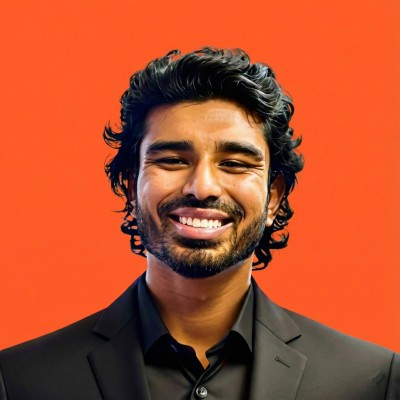
How Ankit Nayal scaled organic TikTok to 50 million views with an AI content factory, and why half of them were wasted until conversion came first.
Most founders who burn through their paid ad budget pivot to organic with one or two accounts and hope something works.
Ankit Nayal pivoted to organic and went to 150 to 200 TikToks a day.
He runs this for his app Flamme. He has crossed 50 million views. He told me more than half of those views were wasted, because conversion was not in his framework yet. The episode is about what he built once that became obvious.
The path there started in a cave. After losing his ad budget in 2025, Ankit scrolled TikTok for four hours a day for two months. He compared it to having McDonald’s every meal. Out of that came the VSC framework. Viral: an under-5,000-follower account with a 100K-view post that is still picking up trend score. Scalable: a format that replicates cleanly across accounts. Convertible: a video that actually pulls downloads. Memes pulled 0.1% conversion. A girl reacting to a hook pulled 0.5%. A 100K-view reaction beat a 2M-view meme on bang for buck.
The system around the framework is more cumbersome than most posts about it admit. He started by filming himself and concluded that a brown man with an Indian accent was not the best fit for the American market. He moved to Russian creators sourced through Kwork.ru at one dollar a minute and twenty-five cents per ten-to-fifteen-second reaction. ChatGPT translation overhead killed that workflow. He moved to Sora 2, then to Seedance. Every clip gets broken into five-second blocks because the model starts hallucinating past five seconds. A CapCut filter layer with ten effects scrubs the plastic skin off AI faces. Phones get lined up on physical farms because the TikTok API gets content flagged.
The funnel sequence he ends on is the part that stuck with me. Organic first, then UGC, then paid. Most founders run it backwards.




About Ankit : LinkedIn
Shamanth Rao: I’m excited to welcome Ankit Nayal to Intelligent Artifice. Ankit, welcome to the show.
Ankit Nayal: Thank you. Very happy to be here.
Shamanth Rao: I’m excited to meet you across the screen. We’ve met in person, of course, but also because I’ve hugely admired a lot of what you’ve done with organic TikTok. It is something that is talked about quite a lot, and it’s also a notoriously hard problem to solve. You’ve solved it at crazy scale. You put out 150, 200 posts a day, and I want to dig into your system for operating TikTok at scale. Let’s start at the beginning. You wouldn’t start off by doubling down on organic TikTok. You were actually looking at paid. What was your experience like, and what led you to organic TikTok?
Ankit Nayal: The story usually goes: a really passionate founder comes along, builds an app, at least in my case, and then going by the Y Combinator ideology of build and they will come, we put the product out. We think that we put our heart and soul into it, so people are gonna line up throughout the door wanting to get the product, and they do not. Which then presents the problem of, hey, we do want to get users in through the door so we understand what’s working, what’s not. How do we manage that? The easiest path to look at is paid, and that’s what we tried initially as well, where it makes a lot of sense. You pay a bit of money, you get people in through the door, you can test your product, you can understand what’s working, what’s not, then you can focus on monetizing, and you know how to bring more people in through the funnel. It didn’t work for us. We went the paid route and we lost a lot of money. We discovered, probably because of a scale issue, probably because the market we are in is quite competitive, dating is a highly regulated and competitive space, that it wasn’t working out. It was 2025, I was almost out of money in the company. We had to look for a silver bullet. We had to find something which was gonna help us save the company. So we turned to TikTok, which I wasn’t an expert in. I am an Instagram boy. We grew up on Instagram, scrolling Instagram every day. Before that, we had Facebook. Before that, we had Orkut. I don’t know if anyone remembers that. The reason I picked TikTok is because I saw on X that TikTok is a very scalable channel. A lot of other consumer products were using it as well. It was roughly the time when Cal AI went big on it, then a couple of other products started going big on it as well. That is basically how we began, how we struggled through the paid ads journey, and how we decided to turn on the TikTok engine.
Shamanth Rao: And that was what led you to the decision. Can you walk us through the earliest days of your TikTok start? Was that a big win right out of the gate? Were there challenges, struggles? What did the early days look like? Clearly, you didn’t start putting out 150 posts a day on day one. Talk me through your first days and weeks, perhaps months.
Ankit Nayal: As you know, we have been in business long enough to know that there are no easy wins. Everything in business is fought for with a lot of sweat, definitely blood at times as well. Same with TikTok. We went on there and it was just brutally hard. I had no idea how TikTok functioned. I’ve been moving between the US, Europe, and India, and even to use it anywhere outside of the US and push to US TikTok, we had to get a VPN. The whole setup was a frenzy. You need to have the right infrastructure. You need to have the right hardware. If you do a certain thing, TikTok shadow bans your account, which means your posts are not getting pushed out. So we discovered a lot along the process. When I was struggling with it, I realized that the only way for me to figure this out was to immerse myself into TikTok like a TikTok native. So I went on TikTok. I scrolled TikTok for four hours every day for two months. It was a comparable equivalent to having McDonald’s every day for breakfast, lunch, and dinner, and maybe a snack as well, which is to say that it was very unpleasant dopamine-wise. But after that period, we started laying a framework in place. The first thing we understood is how do we set the right infrastructure? How do we run the phones in the right manner? How do we plug in the right proxy? How do we do the right presets? How do we create the account? How do we warm up the account? All of this to ensure that TikTok doesn’t begin by flagging your top traffic. Once this first step came into place, we started playing around with the content. We ran a lot of tests, and I believe that any kind of marketing is about A/B testing and understanding what is working and what is not, then drilling deeper into what works and discarding what doesn’t. So this was kind of the starting process of TikTok and how we began the journey.
Shamanth Rao: And it certainly isn’t easy. I’ve seen and talked to a lot of folks who have basically been stuck in the 200-view jail, as they say. So you really shut yourself in a cave and looked at TikTok. What were some of the things you noticed sitting in that cave that you wouldn’t have noticed otherwise?
Ankit Nayal: Firstly, being in a cave allowed me to run experiments without being distracted. Otherwise, if you’ve been on LinkedIn or X, you notice there’s a constant influx of new information and new things which could be done. And if you have that much data coming in, you never have any idea: should I be trying this, should I be doing this? So being in a cave allowed us to run our own experiments and understand what would work well, not by getting distracted, but by running clean tests. The second thing it allowed me to do is understand what kind of content performs on TikTok. It’s not the same as Instagram, where because you have a certain audience built up already, you can leverage that audience to push any kind of content and get it pushed to a wider audience. Instead, how TikTok operates is: initially when you post any video, if it doesn’t get shadow flagged or banned, it’s going to be shown to a cohort of 300 users. They might exactly fit your demographic or they might not. But depending on how they react to the content and engage with it, the video gets pushed to the next batch of 300 users, and TikTok keeps tracking this engagement. It keeps tracking how people are responding, and it’ll push more to those types of users. Hypothetically, let’s say you put a video of dancing on TikTok. TikTok notices that brown users are reacting better. So the next cohort it pushes to will have a higher concentration of brown people, and so on. This is one of the reasons TikTok is a goldmine for consumer apps, because you can go on TikTok without having a large follower base, and TikTok gives you the same credibility and same push as someone with a larger following. This is one of the key things we discovered by running those experiments. This is why we decided to dig deeper and go deeper into TikTok.
Shamanth Rao: And in terms of the formats that you were posting, what difference did it make after this immersion? Because you probably had certain ideas about what you wanted to post. Did that change dramatically once you went through this immersion process?
Ankit Nayal: The biggest thing that changed for us is the way we thought of it. Earlier on, we used to think that content is something we should produce ourselves. We should ideate on it, create a whole mood board, create a content type, put that content type out, and see what sticks. I realized that’s a lot of bullshit. If we go that way, it’s so much pain trying to find the right format, going through stuff which people have already done. What I discovered during this cave-like meditation is that you can already take what’s working and improvise on it. You don’t need to go from scratch and reinvent the content type. Instead of reinventing things or trying things from scratch, we went in, we took stuff that was already working using a framework we have. We call it the VSC framework: viral, scalable, convertible. We employ this framework, pick the right kind of content, and then we push out replicas of that content on TikTok. We notice that performs much better because the hook is verified, the content type is verified, the pain is verified. We don’t have to go and ideate on those things all over again.
Shamanth Rao: What’s an example of how you might have used that framework?
Ankit Nayal: Let’s pick it apart piece by piece. The first part is V for virality. On a high level, it sounds quite simple. You go into TikTok, you find an account with less than 5,000 followers, and you pick their content which has gone viral, defined as anywhere over 100,000 views. Sounds good on paper, but the issue is what a lot of people ignore is the trend score of this content, which means: when did it go viral? How did it go viral? How is it still picking up? What is the tracking of this content over time? So that’s something we involved in the V component, where we go into a content and see if it’s trending currently or not. That’s quite important for your content to go viral right now. If you pick a piece of viral content that went viral three months ago, it doesn’t apply right now on TikTok. So V is picking the right piece of content. Then S is figuring out if the content is scalable. What that means is, if you can take a brilliant piece of content and create one copy of it, it is really hard to scale. I believe that TikTok is a volume game. At one point, we are pushing out 150 to 200 pieces a day, and for that, we need to employ heavy scale and pick formats that can be replicated easily across accounts. Ideally, in our case, that means you can use real UGC for reaction videos, or you employ a lot of AI, which is what we do. And the third part is the trickiest. Out of all the views we garnered, roughly 50 million plus, I would say more than half of those were wasted because we didn’t understand the last part until later, which is that conversions are really important to the content. You can have content go viral, you can have content you can scale, but if it doesn’t convert to downloads for your app, it’s not going to work. So what we did is we started doing a semantic analysis on the comments to understand what direction they were going in. Were the people interested in the product? Were they not interested? Were they asking for the product? Were they asking for something similar? This comprises the VSC framework, which is what we use to pick any piece of content we put out.
Shamanth Rao: And I would also imagine it’s conversion to purchases, not just downloads. What are some examples where something went super viral but didn’t really result in purchases, and the other way around, where something may not have gone super viral but still resulted in purchases?
Ankit Nayal: Memes. Memes are easily producible content that have the capacity to go really wide, but the issue is that they convert really low. We discovered this when we had a couple of memes cross a million views and nothing moved.
Shamanth Rao: Yeah.
Ankit Nayal: Fun to watch them cross a million, but no reaction was coming through to the product. Once we realized this, we started looking a bit deeper into the format. Memes roughly got us a 0.1% conversion rate, which is not that high given the amount of effort you need to unlock the right kind of meme. On the other hand, we have a reaction video of a girl reacting to a hook and responding, “Next scene is an ad clip,” that converts much better. That leads to roughly a 0.5% conversion rate. And what that means is even if you have a video with 100,000 views but you have the right conversions on it, that will give you much better bang for your buck than a video that hits two million views with low conversions.
Shamanth Rao: Ultimately, you just don’t want crazy vanity metrics. That makes sense. I know you briefly talked about AI. Talk to me about what you were using to produce content in the early days. How much AI, how much real creators?
Ankit Nayal: Early on, I filmed myself a lot. I discovered that a brown man is not the best to sell into the American market, and it was probably my accent as well. So once we came to that discovery, we started playing around and seeing how we could get women to come on and do UGC for us. We employed two methods. One, we worked with some creators who were posting content on their own accounts. We hired them in-house, trained them in-house, and put them out in-house, and that worked quite well. We also tried hiring creators in Eastern Europe so that they could create content for us, not push it out since we had the infrastructure in-house, but create content for us and we could leverage that. What we noticed with both of them is that real UGC was a lot of management work. It was really hard to manage that while also trying to build an organic channel. Managing the creators takes a lot of effort. So even though it was leading to positive results, we could only focus on one of the avenues, either organic TikTok or UGC creators, and we decided to go the organic way. Then while we were sourcing the content from Russia, it was working well. But using Google Translate or ChatGPT to translate everything was a big pain, and it started wearing down as well. That’s when the models started improving. We had Sora, which came out, then Sora 2. Incredible model, performed really well, and we started plugging into it directly instead of going the real UGC route.
Shamanth Rao: And I know you told me about this offline, but talk to me about recruiting folks from Russia, why you chose Russia, and some of the communication challenges you briefly hinted at.
Ankit Nayal: We went on Kwork.ru. It’s like the Fiverr of Russia. The reason we picked that, very honestly, is because we were able to get videos for as cheap as one dollar for a minute recording. They would do multiple reactions in one minute, and each reaction would cost us roughly around 25 cents for a 10 to 15 second reaction, which was incredibly cheap. It was just a matter of economics, and economics worked out really well for us. Then the big hurdle came when we started putting out jobs. We had a lot of applicants come in, and we had to negotiate with them, talk with them, interact with them, train them. Doing this already with a creator who speaks English is hard. When you combine that with the fact that they can’t speak any English, and we can’t speak Russian, we had to rely on ChatGPT all the time to pull this communication back and forth. It’s quite easy if you just need to tell them a set of instructions like, “Hey, go create a video.” But if you need to say, “Hey, I want you to react like this. These are the reference videos. This is what you need to pick from. This is what you did wrong on the last one,” and you do this across five or ten people at the same time, it adds up quite a lot. That is one of the reasons we had to pull off this plan and switch out of using the Russian UGC creators.
Shamanth Rao: So these creators were not speaking, they were reacting. These were voiceless videos.
Ankit Nayal: Yeah, that’s one of the hurdles there.
Shamanth Rao: I can imagine. Talk to me about the shift to AI creators. You talked briefly about using Sora. What was that shift like? What has AI been able to do and what hasn’t it been able to do at this point?
Ankit Nayal: Just to be clear, the point keeps changing every couple of months. I don’t know if you remember that video of Will Smith eating spaghetti, which went viral everywhere, and how it has transitioned to show the progress in AI capabilities over time. When we initially launched onto the model, I think we started with Kling, the original one. We used Fal. We plugged in with Kling, then Sora came out. We started using Sora, and then Kling came out with motion control, so we plugged in with that. Then Seedance came out. Veo 3 was also in the middle, through Google. What I’m going to tell you is based on our experience right now, again, very different from what the next couple of months are going to look like, and very different from what the last couple of months looked like. Our experience right now is that we’ve been able to really hone down on AI UGC. We realized there are a couple of limitations. If you have them doing anything longer than 15 seconds without breaking it into multiple clips, it doesn’t work well. If you try to create hyper-realistic close-ups, it doesn’t work really well either. But we discovered a couple of things we do right now to get the AI UGC right. One is we realized that one scene needs to be broken down into multiple scenes. If you have the AI speaking continuously, it’s more detectable. If you take a ten-second scene and break it down into three, three, and three-and-a-half seconds, it works better. Secondly, there are a couple of filters you can place through CapCut which remove the plastic skin effect. AI has a plastic skin where if you generate something with AI, it has this plasticky look, and it’s obvious it’s AI. We ran a lot of experiments, and we have a filter layer right now composed of ten different effects that removes the plastic skin completely and makes it look really natural. What we struggle with is creating longer content. Anything longer than 15 seconds becomes harder to manage or just requires a lot of editing to make it scalable, and that’s something we are working on right now. We are building a tool internally which allows us to do this without having to cut through everything manually. Roughly for each clip right now, it costs us about a dollar or two through AI.
Shamanth Rao: And you said longer clips are harder. Are you using continuous characters for this? Does that solve the problem? Does it still need a lot of manual effort?
Ankit Nayal: Anything with AI constructed over five seconds needs a lot of manual effort because the scenes… AI starts to hallucinate the moment you’re crossing that five to ten second mark, and anything longer than that needs to be broken down. What we are doing though is using consistent characters, because they help us create content and help an account have more legibility if the same creator is coming on the account again and again.
Shamanth Rao: Let’s say you needed to create a 45 second video. Talk to me about what the different things a human would do from start to finish to make that happen.
Ankit Nayal: When you said human, are you talking about a human or an editor?
Shamanth Rao: Whatever the human does. Maybe there’s an editor, maybe there’s somebody else. I don’t know what your team looks like.
Ankit Nayal: You’re talking about AI UGC, right? Not a human doing this.
Shamanth Rao: About AI UGC. That’s exactly right.
Ankit Nayal: We don’t generate 45 seconds. It’s too long for us and it doesn’t lead to any positive benefits. We do between 10 to 20 seconds.
Shamanth Rao: So just look at the longest that you generated.
Ankit Nayal: Let’s pick 20 seconds. What that part of the process would look like is: firstly, the biggest thing we focus on is the storyline, because no matter if it’s real UGC or AI, if the storyline is not intact, it doesn’t work. Once the storyline is put in place, usually using Claude, the second step is we begin with the generation. What we ask Claude to do is break down the 20-second storyline into five-second intervals. Usually we let the generation happen for seven or eight seconds so we can cut out the right scene from the middle of those five seconds, or we can take the five seconds and crop it into multiple smaller clips. Hypothetically, let’s say we have to generate four five-second blocks. We take each of them, generate an eight-second video, and then chop the eight seconds down, remove the hallucination bits and the parts where it’s not looking right, to make it a compressed five-second clip. Then we combine the four five-second blocks to create a 20-second video. After that is when we put the CapCut filter to make sure the plastic effect is completely removed and it looks as close to human as possible.
Shamanth Rao: And who are the team members involved in this entire process? What does your team look like through this?
Ankit Nayal: Just a media writer, someone who creates the script and puts things together, and the editor, who is the one who generates the video.
Shamanth Rao: Got it. So there’s somebody who’s coming up with the ideas, and there’s somebody who’s working with CapCut to generate the footage and put it together.
Ankit Nayal: Exactly.
Shamanth Rao: And with all of this, are you still using voice or is it still voiceless?
Ankit Nayal: We do combine voice sometimes. For that we have an extra ElevenLabs plugin which comes in. We’ve got a couple of voices on ElevenLabs that are quite natural. We try to incorporate those voices. If we are not doing it for a creator account, then we let Seedance generate the voice itself, and it is not that far from real.
Shamanth Rao: I also ask because with lip sync, it’s still a challenge, at least in my experience. From what you’re saying, if I understand correctly, you’re using voices as voiceovers, but not to lip sync the creator.
Ankit Nayal: Exactly.
Shamanth Rao: Which I imagine makes it easier, because you’re not worried about the lip sync anymore.
Ankit Nayal: Sora 2, before they pulled it off the market, used to be actually quite good at lip syncing. But Sora isn’t available right now.
Shamanth Rao: With any of the new and upcoming models, you referenced Kling, Seedance, are any of these steps in the right direction, or do you feel like lip sync is just not usable lately?
Ankit Nayal: I wouldn’t say it’s not usable. I think it’s progressed a lot over the last one year. Seedance has definitely taken the lead regarding any kind of content produced using AI, even regarding the lip sync part. Specialized tools like Arcads and HeyGen are doing really good with it as well. But when you just look at a raw model, Seedance is definitely the top. If you haven’t used it, I would highly recommend going through it. I really like Seedance’s performance.
Shamanth Rao: We’ve been just starting to play around with Seedance, but I echo what you said about the lip sync. I think it’s still not close to primetime. When we do use lip sync, it is with a lot of background editing, so we just don’t show somebody talking to camera. We show something almost like a green screen, with the person in part of the screen. And it’s still not 100% convincing. But it sounds like at this point you’re not doing lip sync at all?
Ankit Nayal: When you generate a lip sync, how long do you generate it for?
Shamanth Rao: We have used models like Arcads. I think the max is about 8 to 10 seconds at a time in a clip. And the characters are already consistent, so you run multiple clips showing the character, 8 to 10 seconds each.
Ankit Nayal: Breaking it even smaller, I would recommend trying to have a sentence, keep the length of the sentences to one second, and do it sentence by sentence. That’s going to work a lot better.
Shamanth Rao: Wow. And is that not super manual and super time-consuming?
Ankit Nayal: It is. That’s why we don’t do lip sync, because it breaks the scalability part of the framework where we can’t push out 150 different posts if you’re doing that.
Shamanth Rao: So you just have voiceovers and that makes it easier. You have basically reactions or people moving through a surrounding, and then you put the voiceovers on top of that.
Ankit Nayal: Yep.
Shamanth Rao: Are there other elements that are important from a design perspective? You talked about having the footage, which presumably shows an AI creator. You talked about the voice. What else is important?
Ankit Nayal: When you’re putting out content on TikTok, the music is quite important. That is why I recommend people not to get a business account, because if you don’t have the right music being streamed through, it can make it really hard for the video to go viral. On a platform like TikTok, music plays a massive role. So the factors we look at are: one, the video content itself; two, the text overlay on the video; and three, the music. These are the three things that play a big role for us.
Shamanth Rao: I know we started off talking about how you have about 150 to 200 videos a day, and you just described how putting together a video can be somewhat manual and time-consuming, even with AI. How does this process scale to 150 videos a day?
Ankit Nayal: The first part is picking content that is scalable. With lip-syncing content, it is possible, but it’s just not scalable, and that’s one of the issues we face with it. So the first step is picking content that can be scaled using AI. If it can’t be, then it really doesn’t fit into a pipeline. We operate on volume rather than just putting out one or two videos a day. The second part is playbooks. What I do is create AI playbooks that train the editor on exactly what SOP needs to be followed and how things need to be aligned. Think of it like a little factory that starts working. You have a prompt that needs to be injected. You use Higgsfield or some other model, and you have six or seven different generations running at the same time. Once everything is generated, it is understood how to pass them to CapCut. On CapCut, it’s brilliant at just swapping clips and having the same overlay on them, so this allows us to automate a part of the process as well. And then when posting on TikTok, we just have multiple phones lined up. We have a system set up where we push files to either Google Chat or Slack, lined up on each of the phones, which receives all the files, and then we directly post them from the phone.
Shamanth Rao: That sounds like a very detailed and sophisticated system. What was the path to getting to 150 posts a day? When were you like, “Okay, this is actually working, I need to scale.” What were the building blocks that needed to be in place?
Ankit Nayal: One thing we realized is this kept building on top of each other as we were moving through. We started with one or two phones, and then we started expanding the phone line. We tried a lot of stuff, actually. We tried emulators, we tried Android devices. Got a bunch of work done and some of it didn’t work. As we kept moving, we kept standardizing and fine-tuning things, and that’s how we established the SOP for exactly how the system would work and how it would go online. The advantage right now is that we know how to take the system online. The disadvantage is that scaling it beyond this means I have to expand my workforce, which I do not want to do. I truly believe that in the world of AI, you can build a massive company with the minimum amount of employees required. My goal right now, the next step we are working on, is seeing how we can automate all of this. Then we use it to scale our own content, and we provide this service to other founders as well.
Shamanth Rao: And you said the content generation can be automated, but the editor is much harder to automate. Did I understand correctly that the editor isn’t generating 200 new clips from scratch? They’re reusing building blocks, because they would basically have to make one clip every two minutes or so, which is just not possible. So what does that modular system look like for the editor? How do they make the outputs that have this sort of modularity?
Ankit Nayal: We’ve worked on this system for a long time, and what we are trying to do right now is switch it out of manual mode, because you’re right, the manual mode is cumbersome. It takes a lot of structure to set in. I also know that tomorrow, if I have to do this with someone else, I have to go through this whole process, which doesn’t make sense in the world of SaaS when we can just build tools. So we are working on replacing this part. Think of it in the same manner: what does an editor do? You’ve got a particular video on which there’s a text overlay. If you have the right video coming in through the funnel, you can actually have Gemini read through all of it, try to understand where the video is breaking, and help cut that part out. That’s the tool we are working on right now, where we can get two things through the tool. One is where the editing part happens automatically. We don’t have to have an editor sitting behind the screen cropping through everything. Maybe they verify it before the video goes live and decide if it’s a yes or no. But before that, everything that happens through the editor right now is going to happen automatically. The second thing we are working on: I still believe in using real devices. I’ve noticed that if you’re posting through an API, the content usually gets flagged on TikTok. However, what you can do is set up multiple iPhones, connect them with your device, and have the device controlling all of the iPhones which are posting out content. So that’s something we are currently working on setting up, where we line up multiple iPhones, set up a proper phone farm with roughly 50 to 100 devices, and push out content on all of them.
Shamanth Rao: I can imagine that’s a lot of moving parts, and that’s easier said than done. But you’ve built your way to this point, so it all makes sense.
Ankit Nayal: In Chinese, there’s a saying, 慢慢来, which means it comes slowly by slowly. I believe in that. Rome wasn’t built in a day, and similarly, a farm isn’t going to be built in a day either.
Shamanth Rao: You talked about the playbooks. What’s the point at which you had to step in?
Ankit Nayal: What we place as a flag is when the content is underperforming on a regular basis. That’s when I know something is probably broken and I need to go in and have a look. On a regular basis, we track every day how many views we’re getting and how the content is performing. If we notice that average views are falling quite a lot or there are a lot of discrepancies coming in the content, that’s when I go in, fix it, and then come out of it and let it function. That is the point when I usually step in: when we notice the views are dropping below a certain count, or a lot of content is getting flagged or not hitting the baseline of 800.
Shamanth Rao: To step back, you built quite a sophisticated system. Are there products that shouldn’t be trying this? Are there products where the entire TikTok system doesn’t have to be as sophisticated as what you built? Maybe they’re using one phone, maybe they’re starting from day one. Are there products that should not be using organic TikTok?
Ankit Nayal: I could just name one category: B2B products. When it comes to B2C, the way I think of the structure is if you know what works at organic, you can push it to UGC. If you know what is working at UGC, you can push it to paid. That’s how the funnel lines up, and a lot of founders go the other way around. I truly believe that if you can figure out what’s going to work in organic, which is a lot more brutal than the other two elements, because organic: if you figure out the hook, it works. If you don’t figure out the hook, it doesn’t work. There’s no paying more money to get more views on the content. There’s no hoping it’s going to work, or hoping the creator is going to figure it out for you. No creator is going to do it here. You have to be stepping in either yourself in front of the camera, by creating AI UGC, or by hiring UGC creators to make it happen. So I would say B2B would be the one industry where stepping into organic doesn’t really apply. For any other industry on the B2C front, they should definitely give it a try. Even if it’s just starting with one or two accounts, at least understanding how content works and how content formulates.
Shamanth Rao: For sure. And you’re at 150 to 200 posts per day now. What, if anything, is stopping you from going to 1,000 a day?
Ankit Nayal: We need to set up a proper phone farm to make that happen.
Shamanth Rao: And is that not possible, at least in theory? You need a bunch of iPhones, you need a person to operate the iPhones. I’m not saying that’s trivial, but go ahead.
Ankit Nayal: It is possible, but the two solutions I have in front of me right now are either I hire one more person and tell them exactly what they need to do and give them more iPhones, or I try to figure out how to automate the entire system, how we can run the farms from our computer devices so we don’t have to keep relying on getting more people, training them, and having them do it. The second option is what we are working on currently.
Shamanth Rao: And that can make the entire process a lot more efficient and easier. Ankit, this has been incredible. I’ve certainly learned a lot, and I’m excited to put this out to the world. This is perhaps a good place for us to start to wrap up. But before we do that, can you tell folks how they can find out more about you and everything you do?
Ankit Nayal: Go to my website, www.annayal.com. You can locate me there, or you can find me on X @consumerxai. Always happy to help out with whatever folks need. Reach out. Don’t be shy. Say hi.
Shamanth Rao: And you also have a TikTok farming playbook. Where is it?
Ankit Nayal: It’s located on my website as well. You’ll find it in the same place when you look at my website.
Shamanth Rao: We will link to your TikTok farming playbook. Bring your bots and shovels to the farming playbook. This is a good place for us to wrap. Thank you again for being so generous with your time and insights.
Ankit Nayal: Beautiful.
Shamanth Rao: Thank you.